High Leverage Practices for Students with Disabilities- image of children learning through numbers activity

The High-Leverage Practice guidance document was collaboratively developed by the CEEDAR Center and the Council for Exceptional Children. Along with the document itself, these supplemental resources have been created to help assist the spread and implementation of the HLPs.

As the HLPs are refreshed to reflect emerging research, evolving cultures and context, and student diversity, we have reorganized the structure to focus on HLPs that are foundational to designing and implementing high-quality instruction, while still recognizing the need for and importance of all 22 HLPs. The HLPs are now organized under the following four domains: Collaboration, Data-driven Planning, Instruction in Behavior & Academics, and Intensify & Intervene as Needed. Six HLPs have been designated as pillar practices needed to produce strong outcomes for the broadest range of students. To reflect how HLPs work together and are used concurrently, the remaining HLPs are embedded in these pillars. The HLP refresh also includes the following: emphasis that HLPs are for all teachers, alignment with multi-tiered systems of support (MTSS), elementary and secondary examples, and writing specific to practitioners.

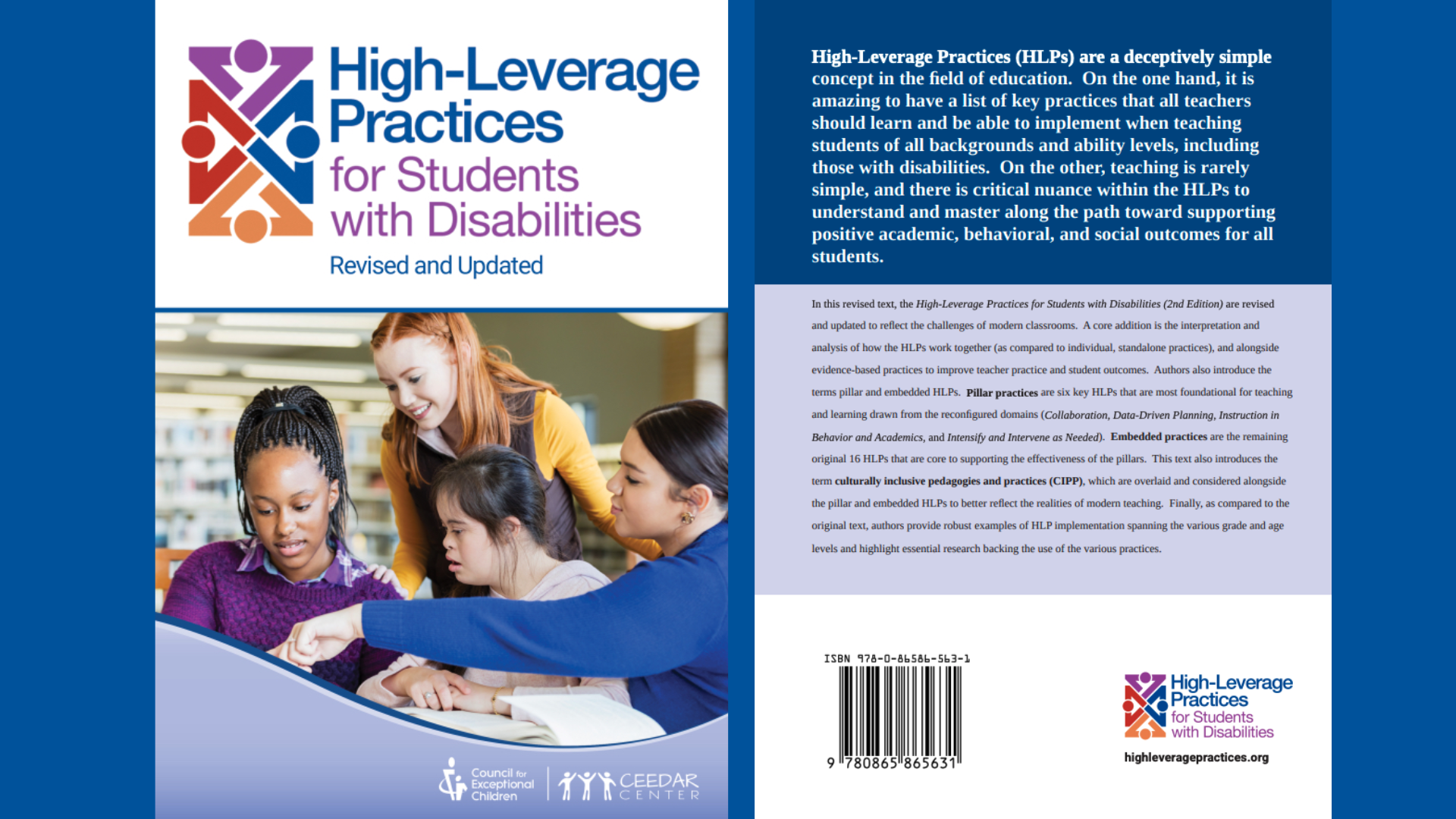
High Leverage Practices for Students with Disabilities book cover and last page.

HLPs for Students with Disabilities

High-Leverage Practices for Students with Disabilities is available for download at no cost by clicking below.

High Leverage Practices Chat GPT tool graphic

High Leverage Practices Chat GPT

Meet the HLP GPT – your AI partner for embedding High-Leverage Practices in everyday teaching! From collaboration to instruction, it gives practical tips to support ALL learners.

Four connected circles labeled Collaboration, Data‑Driven Planning, Instruction in Behavior and Academics, and Intensify and Intervene as Needed.

High-Leverage Practices Alignment Tool

This interactive alignment tool, developed in collaboration with CEEDAR and the Council for Exceptional Children (CEC), identifies which IRIS resources provide information on HLPs.

HLP Refresh Overview

In this lecture, Dr. Michael Kennedy from U.Va discusses the reasons why leaders from CEC, CEEDAR, and OSEP made the decision to update and refresh the 2015 HLPs in Special Education to become the 2024 HLPs for Students with Disabilities. These slides are intended to be introductory, and supplement the newly published text which is available from CEEDAR or CEC.

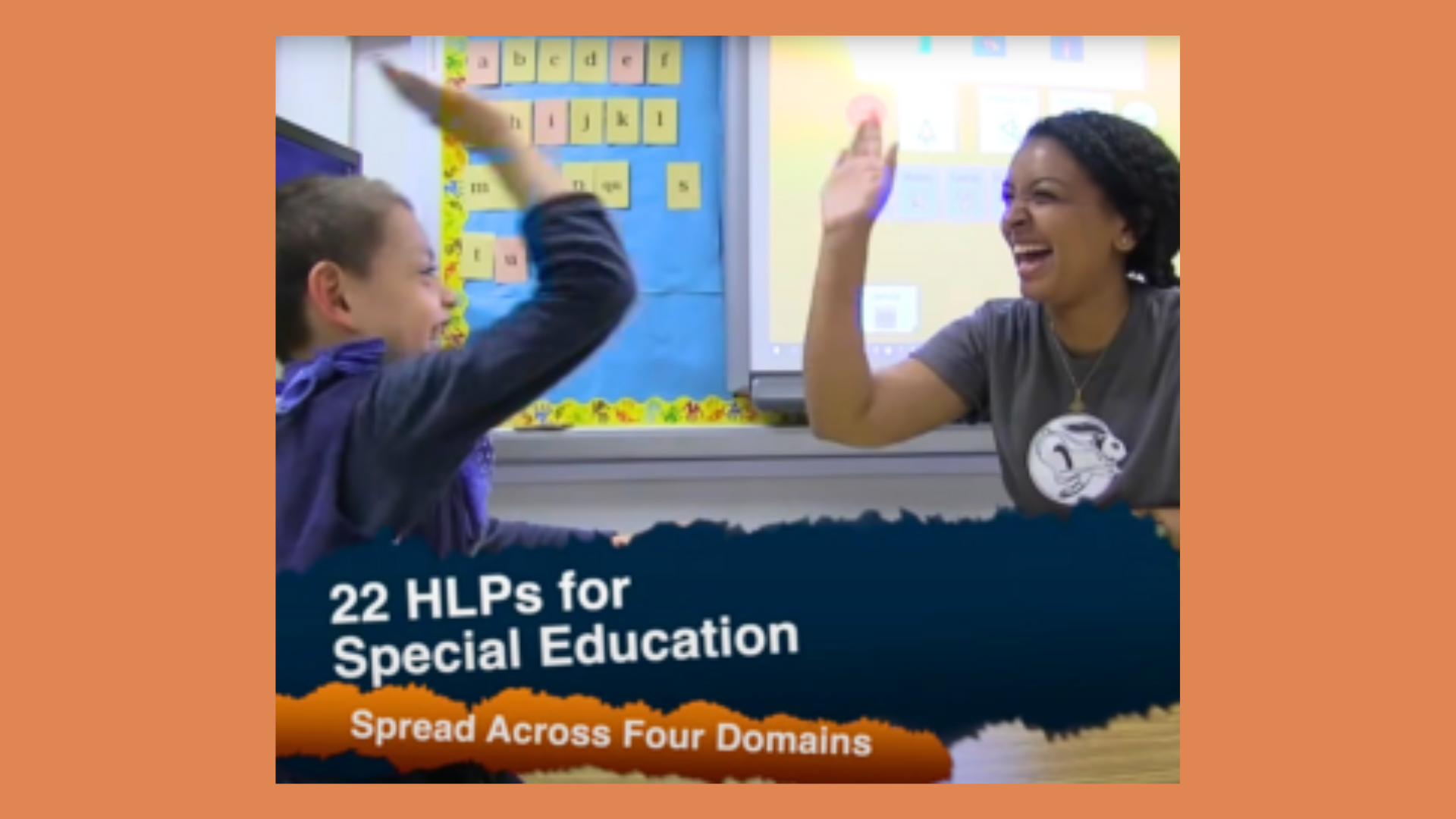
Educator and student high‑five in a classroom with alphabet cards and a digital screen, illustrating interactive special‑education teaching under the heading “22 HLPs for Special Education Spread Across Four Domains.”

High-Leverage Practices Videos

The High-Leverage Practices (HLPs) video series is a free resource that is easy to incorporate into a wide range of professional learning formats. Use these concrete examples to anchor and reinforce both knowledge development and application.

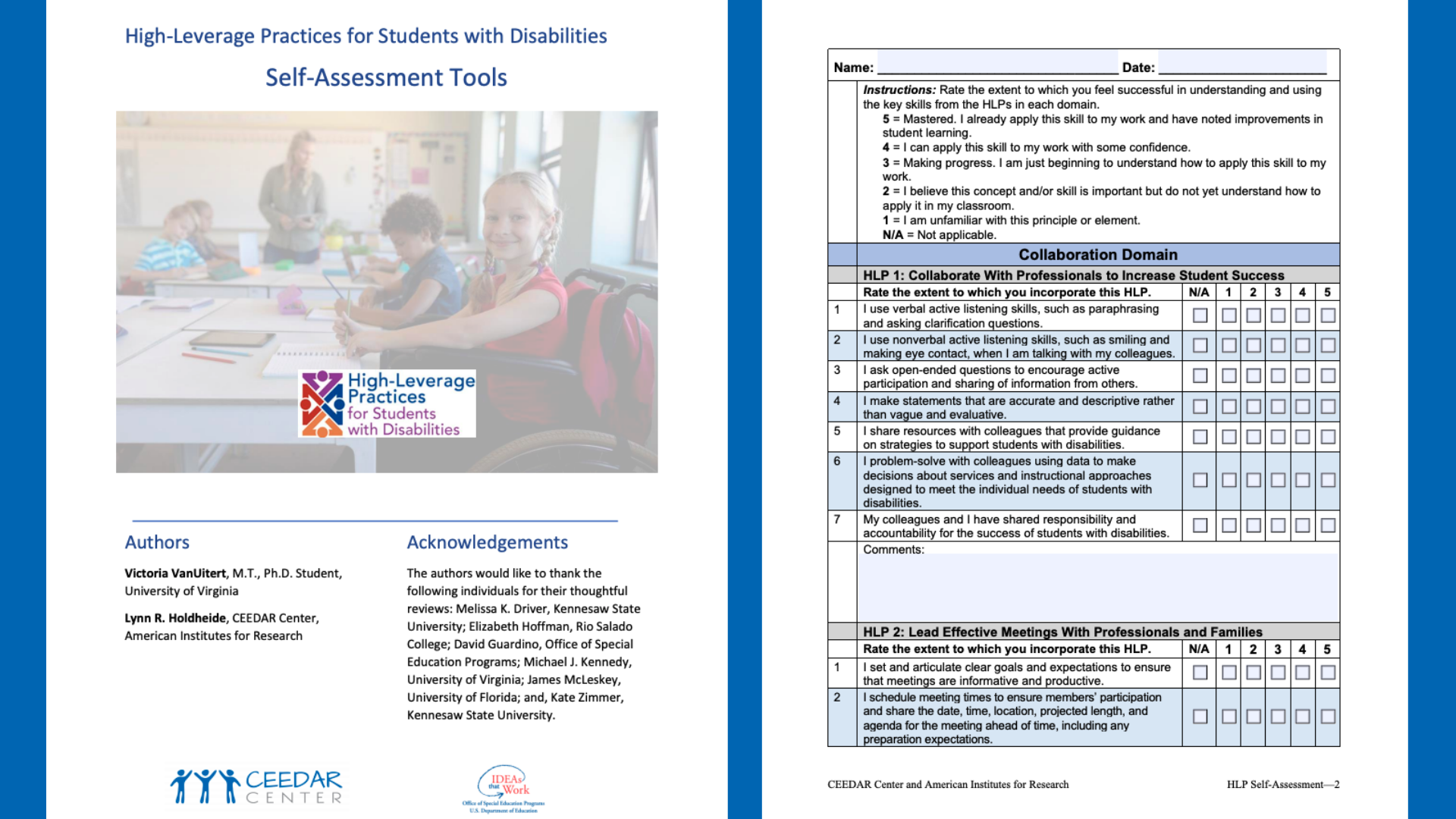
High Leverage Practices Assessment Tool cover page

HLPs Self-Assessment Tools

These High-Leverage Practices for Students with Disabilities Self-Assessment Tools are designed to help preservice and in-service teachers reflect on and assess how well they are implementing high-leverage practices (HLPs) for students with disabilities. Teachers and teacher candidates can self-assess on all 22 HLPs or target only specific HLPs.

Supplemental Resources

Documents & Files

Icon of a leader standing in front of three people.

High-Leverage Practices Leadership Guides

These guides are intended for school leaders (Administrators, Teacher Coaches, Mentors, etc.) to support their teams in effectively implementing the High Leverage Practices in the classroom. The guides include:

  • Tips for school leaders to support teachers
  • Questions to prompt discussion, self-reflection and observer feedback
  • Observable behaviors for teachers implementing the HLPs
  • References and additional resources on each HLP

An icon of a teacher holding a guide book.

High-Leverage Practices Faculty Guides

These guides are intended to support educator preparation faculty in effectively training teacher candidates on implementing the High Leverage Practices in classroom settings. The guides include:

  • Tips for educator preparation faculty to support teacher candidates.
  • Questions to prompt discussion, self-reflection, and observer feedback
  • Observable behaviors for teachers implementing the HLPs.
  • References and additional resources on each HLP.

An icon of an open book and a floating checkmark above it.

Practice-Based Learning Opportunities

Teachers can learn to use high-leverage practices (HLPs) when they have effective opportunities to practice using the HLPs in thoughtful ways. To support teacher educators’ use of HLPs, the CEEDAR Center, in collaboration with Educator Preparation Program faculty across the country, has collected a set of effective practice opportunities that we refer to as practice-based learning opportunities or PLOs.

Two CEEDAR icons high-fiving.

High-Leverage Practices and Evidence-Based Practices: A Promising Pair

High-leverage practices (HLPs) and evidence-based practices (EBPs) when used together can become powerful tools for improving student outcomes. This brief is designed to show the promise of these practices in advancing educator preparation and practice and, subsequently, outcomes for students with disabilities and those who struggle.

A CEEDAR icon crossing a crosswalk.

High-Leverage Practices Crosswalk

This document shows points of alignment between the following three important documents: High-Leverage Practices, High-Leverage Practices in Special Education, and Promoting Principal Leadership for the Success of Students With Disabilities.

An icon of a flier with a speakerphone on it.

High-Leverage Practices Flyer List

This flyer gives a basic definition of what high-leverage practices are and the criteria that was used in determining which would be included as High-Leverage Practices for Special Education.

© Copyright 2026 CEEDAR